


Europe’s Looming Winter Energy Crunch: Heat, Drought, and Geopolitics Converge
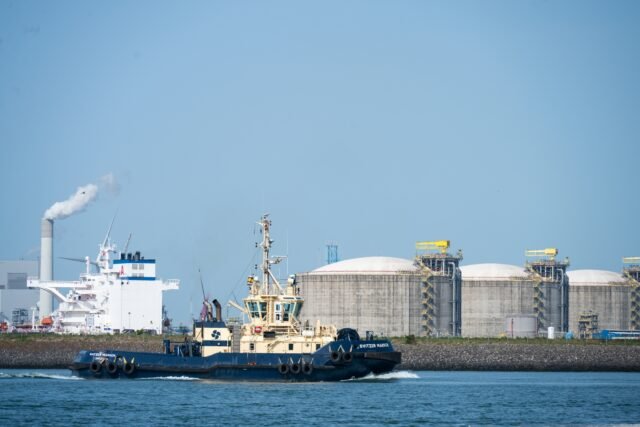
As Europe braces for winter, a rare convergence of extreme weather and geopolitical instability is tightening natural gas markets to levels not seen in over a decade. A fourth heat wave since May, record-low Rhine water levels, and ongoing disruptions to global LNG supplies from the Middle East are together eroding the continent’s ability to refill storage ahead of the heating season.
Storage Levels Lag Behind Seasonal Norms
EU gas storage is currently around 54% full – roughly 12 percentage points below the five-year average for this time of year, according to data from Gas Infrastructure Europe. Energy Aspects warns that Europe’s storage deficit has widened to about 15 billion cubic meters, necessitating higher TTF prices to keep attracting cargoes. The Financial Times and World Economic Forum have both highlighted that the continent risks entering winter with its lowest gas stocks in at least 15 years.
In the UK, the head of Centrica, parent company of British Gas, has warned of potential winter shortages, as wholesale gas prices climb to a one-year high. Dutch TTF futures have surged back above €60 per megawatt-hour, up nearly 37% over the past month alone, underscoring the market’s growing anxiety.
Weather Woes: Heat Waves and Drought Constrain Supply
The current heat wave is forecast to push temperatures above 40°C across Southern Europe, according to severe weather forecasters. This extreme heat is already impacting power generation: French nuclear output is being curtailed as warm river water limits cooling capacity, while stagnant atmospheric conditions are suppressing wind generation.
Meanwhile, the Rhine, Europe’s critical inland shipping artery, is nearing record lows. Reuters reported that water levels at the Kaub gauge are expected to drop to around 20 centimeters, forcing barges to operate at just 15–20% of normal capacity. The Kiel Institute estimates this could shave 0.1–0.2% off German GDP in Q3, highlighting the broader economic ripple effects of the drought.
Global LNG Markets Tighten Amid Middle East Tensions
The global LNG picture has also deteriorated sharply. Following U.S. and Israeli strikes on Iranian targets in late February, Tehran closed the Strait of Hormuz, disrupting roughly 20% of global LNG supply. A subsequent Iranian attack on Qatar’s Ras Laffan facility in March damaged two of its 14 LNG trains, further tightening the market. S&P Global estimates that projected global LNG supply growth for 2026 has collapsed from 11% to just 1%.
Adding to the pressure, Goldman Sachs has noted that China’s natural gas destocking cycle points to stronger LNG imports ahead of winter. This intensifies competition for available cargoes between Asian and European buyers, leaving Europe’s already thin storage buffer increasingly vulnerable.
What This Means for UK Businesses
For UK businesses, the outlook suggests:
- Elevated and volatile energy prices are likely to persist through winter, with wholesale gas prices potentially testing one-year highs again.
- Supply security risks remain, particularly if the Middle East situation deteriorates further or if a cold snap accelerates storage withdrawals.
- Electricity margins are more secure than gas, with NESO projecting adequate generation capacity thanks to new battery storage, gas plants, and interconnectors.bloomberg+2
- Hedging and efficiency measures should be reviewed now, ahead of the traditional winter price premium kicking in.
As the situation evolves, staying informed on weather forecasts, infrastructure developments, and geopolitical dynamics will be critical for navigating what could be Europe’s most challenging winter energy market in years.
Get in touch with our team to explore how to optimise your energy procurement and planning strategy this winter.
Sources: National Energy System Operator (NESO), National Gas, Gas Infrastructure Europe, Energy Aspects, Financial Times, Reuters, Deutsche Welle, Kiel Institute, S&P Global, Goldman Sachs, UK wholesale price data (July 2026).
UK Blackout Risk Falls to Lowest Level Since Before the Pandemic
The UK’s risk of winter blackouts has fallen to its lowest level since before the pandemic, according to the latest National Energy System Operator (NESO) Winter Outlook.
Gas price surge Wednesday
News came overnight Tuesday of a strike in Australia which spiked the European gas market yesterday – https://www.afr.com/work-and-careers/workplace/lng-exports-at-risk-as-woodside-and-chevron-strikes-loom-20230809-p5dv3n. You will see other articles if you Google.
Last year the same strike was not settled until late September.
The reason this affects Europe is that China takes 85%+ of Australian production and without that supply China will outbid Europe for LNG supplies from Qatar which is 40% of European supply.
You have time to wait if you wish to see if the market drops back if your renewal is imminent. The risk is that the strike is not settled and prices rise further in the meantime.
Below are a couple of screen shots from yesterday afternoon
If you wish to talk it through do please call me.
Thank you


URGENT: The EBDS Application Deadline – 2 days left to apply
The EBDS Application Deadline – 2 days left to apply – does it apply to my business?
The Energy Bills Discount Scheme primarily relates to what are referred to as Energy Intensive industries – stuff like glass making, plastics etc. where they use huge amounts of energy. If you are categorised under one of the sectors detailed here, you are eligible to apply. You just need to check your SIC code (as recorded at Companies House) against the list
It also relates if you have insatlled a Heat Network in to any of your properties. You’ll know if you have a Heat Network as it will have been a significant investment & will require ongoing monitoring & maintenance.
If you require any help fill out the Contact Form or call 0800 0 193 244 https://procurementgroup.co.uk/contact/
Too many transactions on your purchase ledger
One of the problems that a lot of people experience is that over time their supplier base gets very flabby. By flabby, what I mean is that you’ve got too many suppliers. Within that there are too many transactions, not just caused by the number of suppliers, but also caused by not managing those suppliers and telling them what your requirements are, which means that they are not invoicing you in an efficient manner. This is procurement management and the aim is to get a control on your business costs because all of those trabnsactions and suppliers are costing you money every time that you post an invoice to your purchase ledger.
Every purchase invoice costs you maybe £30 or £40 to process from start to finish. So that’s from raising the order the whole way through to payment and reconciling the bank. If you can take some cost out of that process, there’s a benefit to you.
It frees up resource within your finance team to do other work.
It’s pretty simple & here are some pointers for you:
1) Run a nominal report by supplier for the nominal codes that you are going to review. Look down that and, with colleagues, seewhich of the suppliers can actually supply more products than they’re currently supplying, whether that’s geographical spread, or product spread or …..
2) Request information from each supplier about the products they supply you with and ask at the same time what else they could supply as part of your cost reduction & spend optimisation programme.
3) Once you get the information back in from the suppliers about which products they’re supplying & could supply, go into the detail of it on a spreadsheet and mark which items could be provided by another existing supplier.
4) with that detail you have the tools to tender the business as part of your cost reduction efforts.
An aim of your procurement management programme could be to reduce the number of suppliers. We had a case where a client with 25 sites had 19 suppliers for the same product range. Madness. Now, it was all done for the right reasons at the time as the sites were opening or acquired, but it was never centrally consolidated as part of a thought through procurement management programme.
In terms of spend optimisation and using cost reduction to drive down your business costs you should also be aiming for one invoice a month per supplier.
1) A consolidated monthly invoice which has a
2) schedule attached to it, showing the breakdown by nominal code for each of the sites which can be sent out to the sites
3) the sites then approve their spend before the management accounts are produced so that you’re covering all the bases.
We’ve seen situations where clients have gone from over 100 transactions a month to 1.
You can do it too. As part of your spend optimisation programme you’ll build stronger relationships with your suppliers so that your entire procurement management programme is integrated and drives down your business costs.
In terms of procurement management, understand your supplier systems and turn them to your advantage. For example, get better credit terms. If the single consolidated invoice is dated the last day of the month, which is typically what it is, and you get 60 day payment terms, you can get up to 90 day payment terms for the items delivered at the beginning of the month.
So lots of benefits and a process that we go through which you can implement either fully or in part.
It’s part of our standard TPG Fair Market Value Savings Process.
e: simonu@procurementgroup.co.uk
m: 07768 421901